Femi Shonuga-Fleming
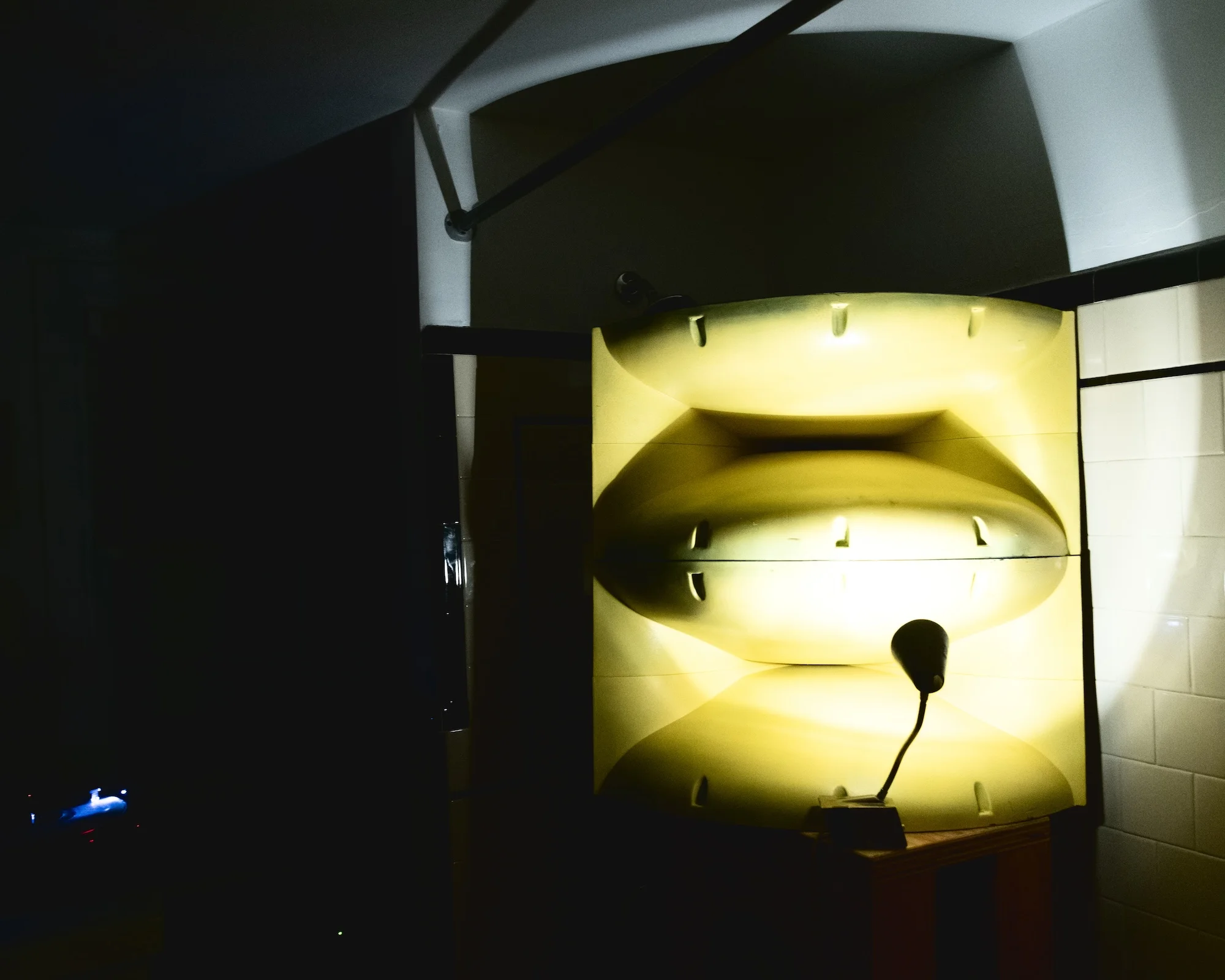
I started the speaker design project in 2025 during the thesis year of my architecture undergrad program. I have always been interested in high quality sound, especially the full frequency spectrum as my music has super low and super high frequency extensions, the full broadband noise. I also started seriously on my vinyl collection towards the start of the semester and needed better speakers. The architecture of the speaker horn was a big inspiration in my urban metabolism class. The exponential speaker horn as an acoustic shape amplifies the volume of sounds at the mouth. I began to design these horns speculatively on an architectural scale and place them in contrasting programs and sites, such as along a riverbank, or in a spillway. This placement of the speaker horn embedded in nature offers a new orientation of the way we experience natural sound. Amplifying the sound of the river invites an individual space for listening deeply. Creating a pace along a river driven by a large speaker horn as the pavilion creates a new space for grounding experimental performance rituals and research. This was the beginning, realizing the horn itself is the architecture for amplifying voice along many concepts.
There is the technical aspect of it all i was interested in as well, how to calculate for a frequency rolloff and the amount of amplification of a speaker driver, or a sound source at the throat of the horn. There are many calculators for this online, and I had been working with whatever I had lying around. All of the speaker drivers I used in these projects in 2025 were harvested from old guitar amps, pa systems, bluetooth speakers, office ceiling pa, whatever i could tear apart. My collection of speaker drivers grew very fast. My old thing was taking 9v batteries out of smoke detectors anytime I would go to a house party to use with my diy synths (horrible practice), but now it was asking venues if they had basements full of old guitar amps i could tear apart.
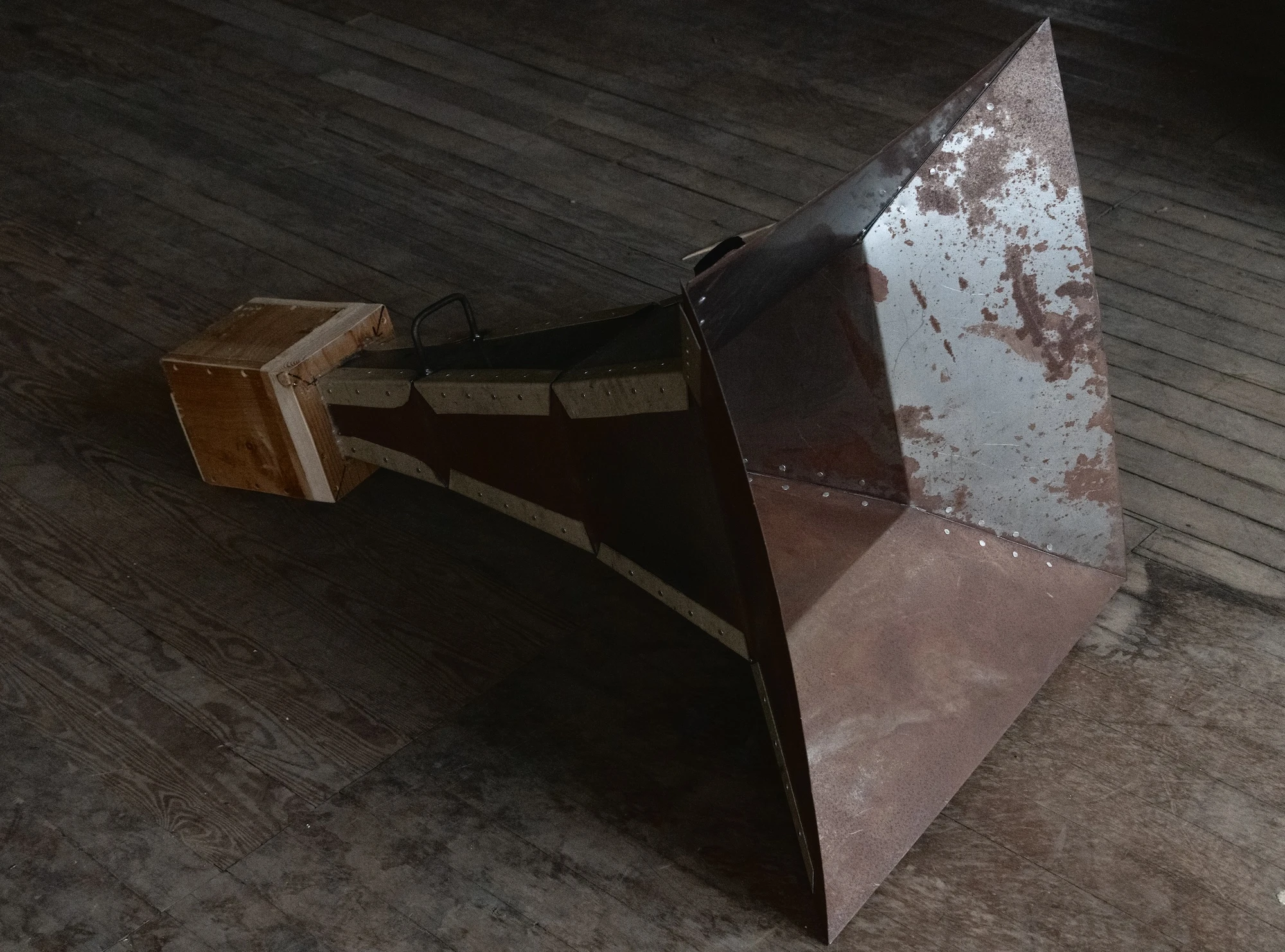
The first horn loaded speaker I built in collaboration with my partner Enid out of sheet steel, this was the first fabricated speaker I had built, and I learned a lot from the practice of it all. I used an old pioneer car audio driver attached to a square hole in a piece of wood I jigsawed to attach to the throat of the horn. The process of cutting the sheet metal and riveting it all together was extremely tedious and a poor design choice, both in terms of difficulty and time consumption. I learned very quickly afterward that steel is a poor acoustic choice for a speaker horn, but an interesting integration as a module in the architectural size of speaker horn. Maybe for part of an installation the hollow midrange sound that steel transmits could be connected to hydrophones in the parallel river, or transducers playing a frequency range specific tone. This horn was an experiment, and I see it still having many iterations and installations, now that I have spent time with it and the way it sounds. The first iteration of the speaker driver part of the horn had an open baffle, meaning the back of the speaker driver would be firing backwards at all times when amplified. This worked fine but wasted energy from the back of the driver. The second build of that back baffle is designed to be roughly ported, but enclosed, and dampened with fiberglass insulation. I also changed the speaker driver to a higher power one. The bass response dramatically increased on the speaker driver, but I heard new resonance from the metal horn at certain notes.
Through the horn project I learned a lot about directivity and the benefits of the exponential speaker horn as opposed to the monitoring and pain I had heard in the past.
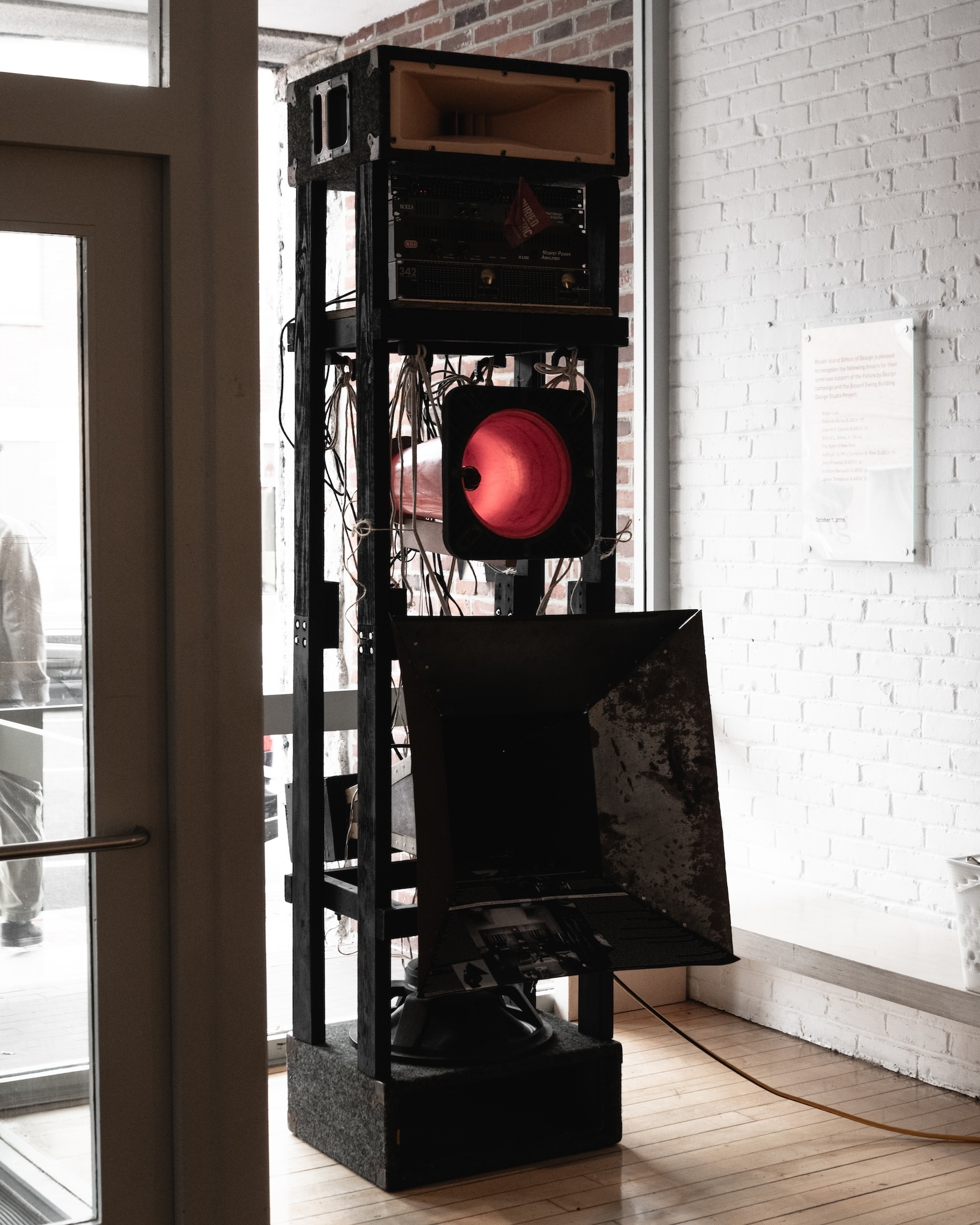
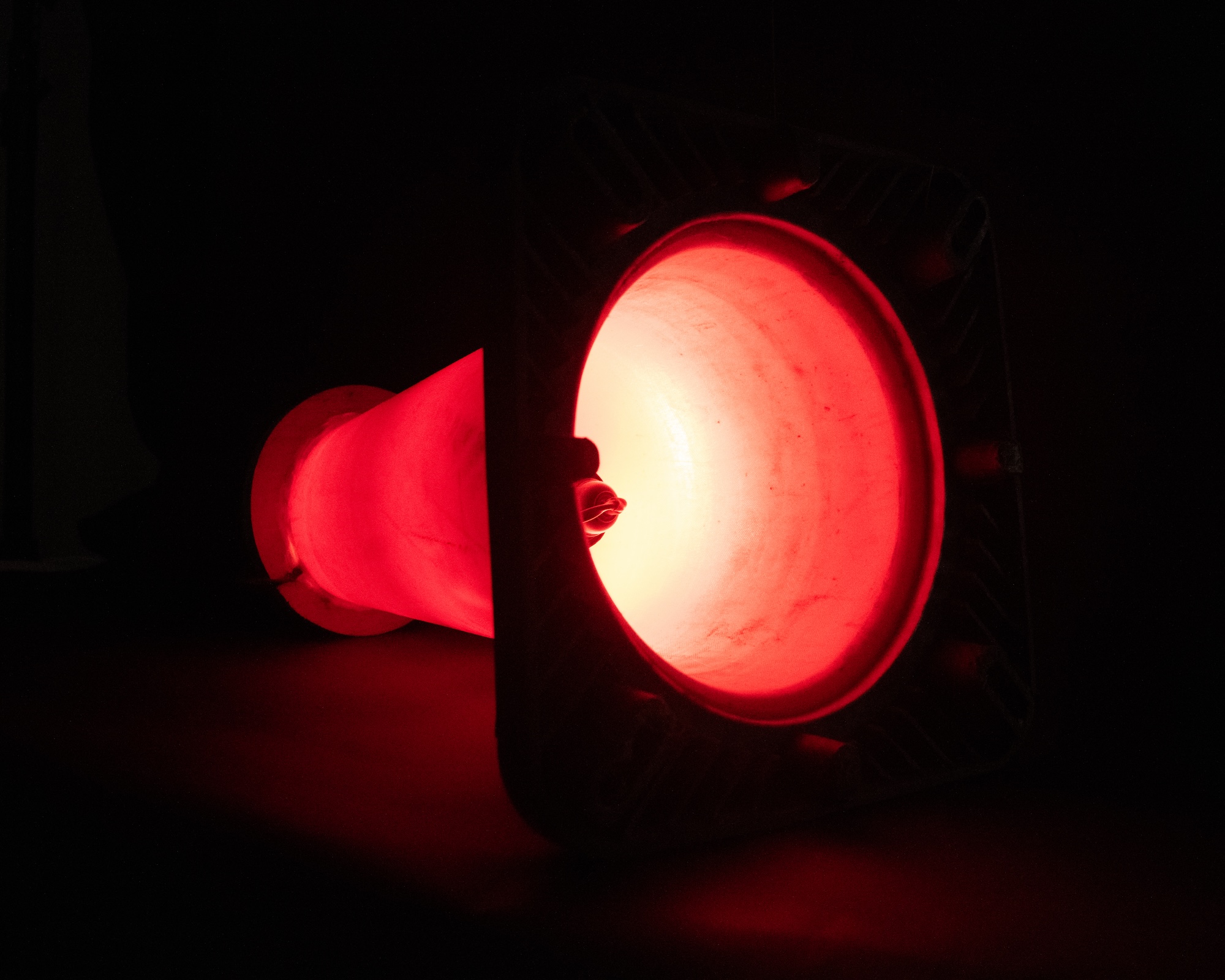
The speaker horn online world led me down many rabbit holes on the internet archive and the wayback machine. I had redesigned my website a few years ago to be relatively plaintext html and these old 90s and early 2000s websites archiving speaker design were extremely inspiring. I would get lost in these worlds, and bookmark everything I could for a later deeper research. I came across many images that inspired a gonzo fabrication flow in my studio at the time. There were so many DIYers creating experimental designs and going into depth on their thoughts and calculations. I even found examples of speaker horns on the architectural scale, cutout of the floor, compression driver horn paths wrapping into attics. I became completely encapsulated in this world, but with little fabrication skills and tool access my experimental designs were realized along the surreal. An experiment realized a traffic cone with a compression driver at the end and plastic bottle on the inside modeled the horn path of a reflex horn, (typically seen as public address horns, at the tops of poles at baseball games or campground). Now that I had made an experimental midrange speaker, the high frequency traffic cone tweeter was a representation of the industrial surround. My studio block was almost always under constant construction, I've subliminally interacted with so many traffic cones on the daily that they probably started showing up in my dreams. I was so deep in the horn lens that one day after seeing a cone lying on its side and yelling "HORN!" I knew what had to be done. There is something interesting about the readymade horn. It screams architecture and infrastructure and urban ecologies. A re-use and recognition towards this surreal future. These objects will create these environments, and they are tools for voice, after being brought into existence, they don't end at the object, because they can be amplified. Much like the site specific nature of my music practice, these designs will travel and have many voices and respond differently to space, but not as the hidden speaker, these speakers are central. Their materiality creates distinctive personalities to evolve through rituals and movement. They are stationary objects that can reorient programs and move sound in space.
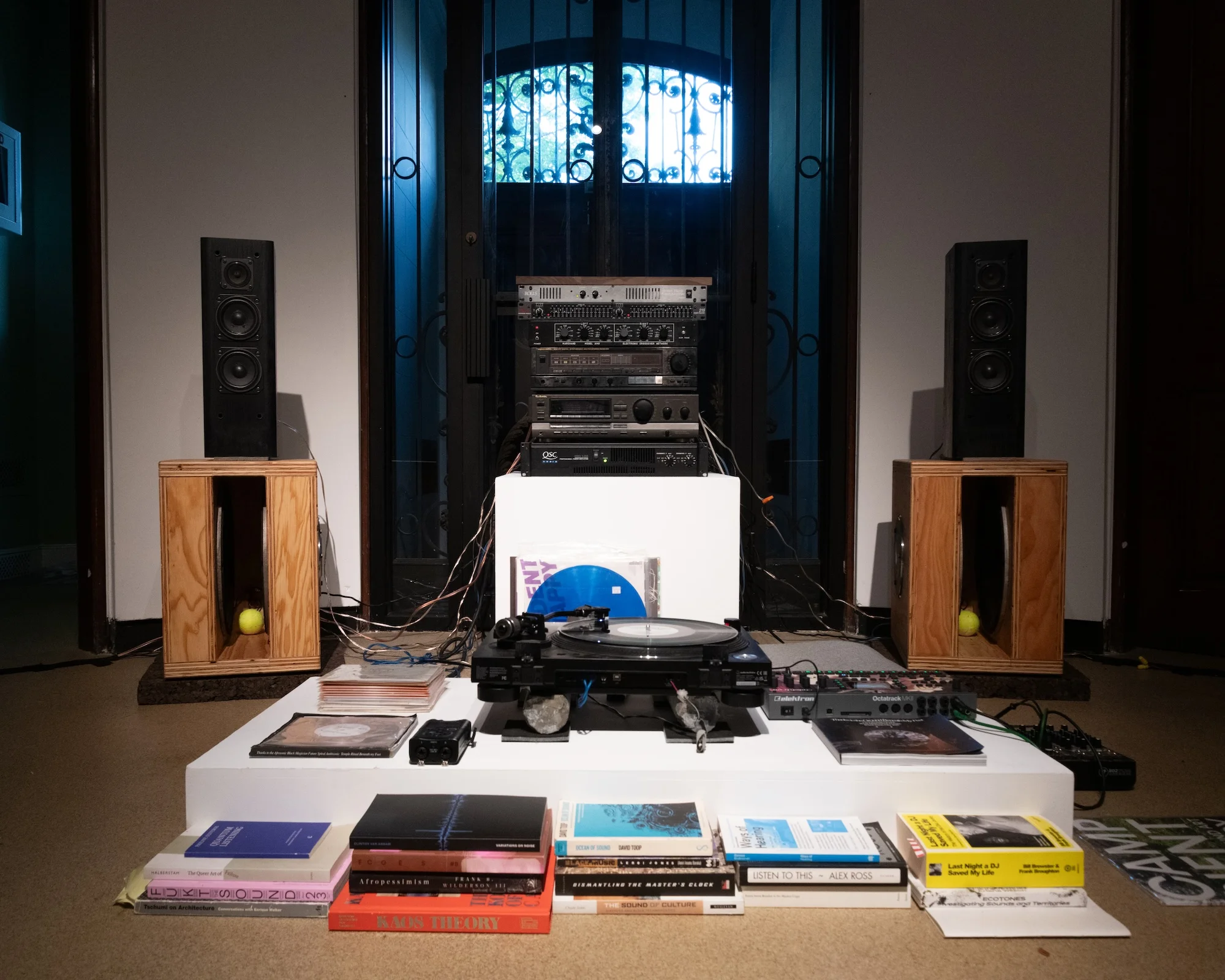
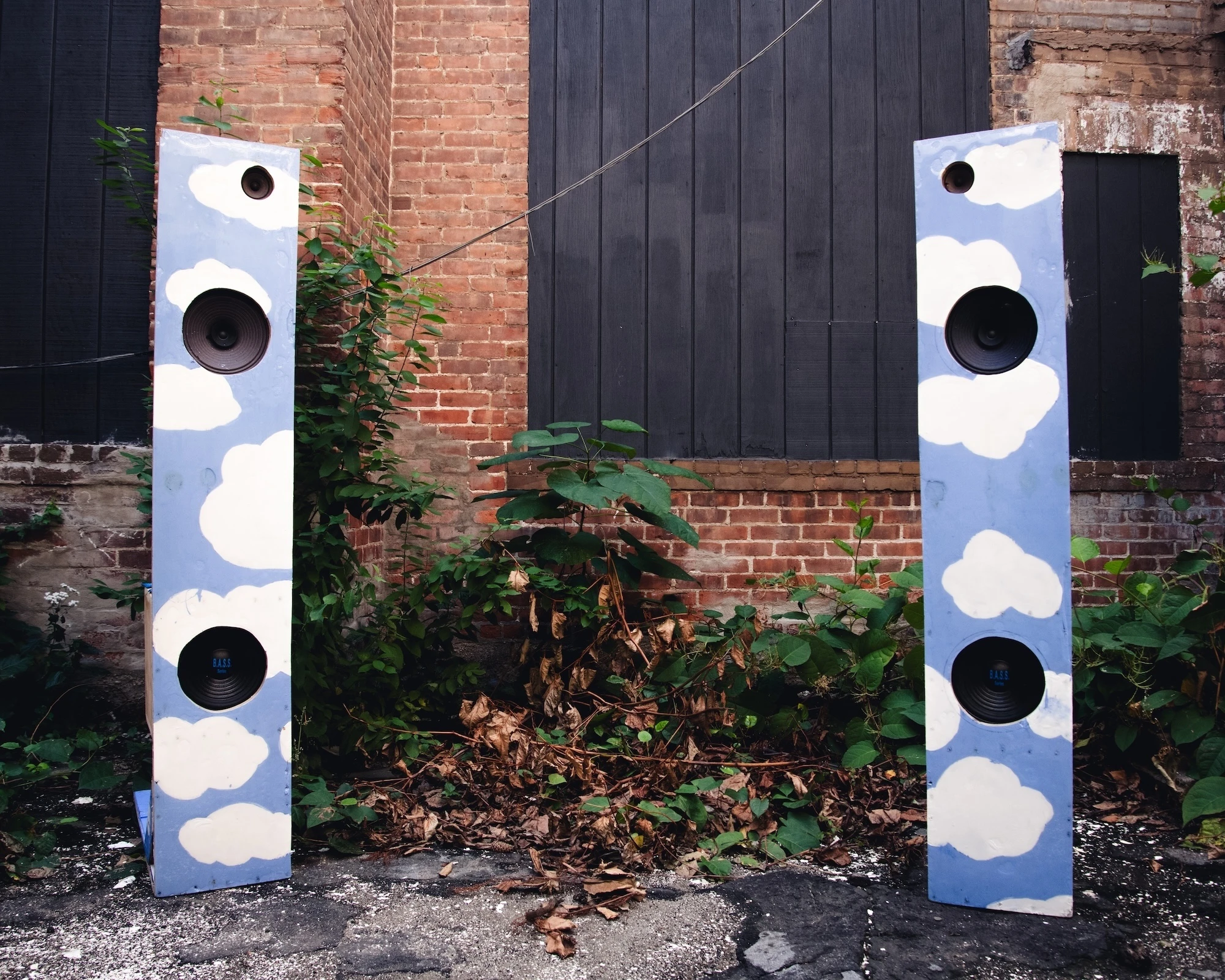
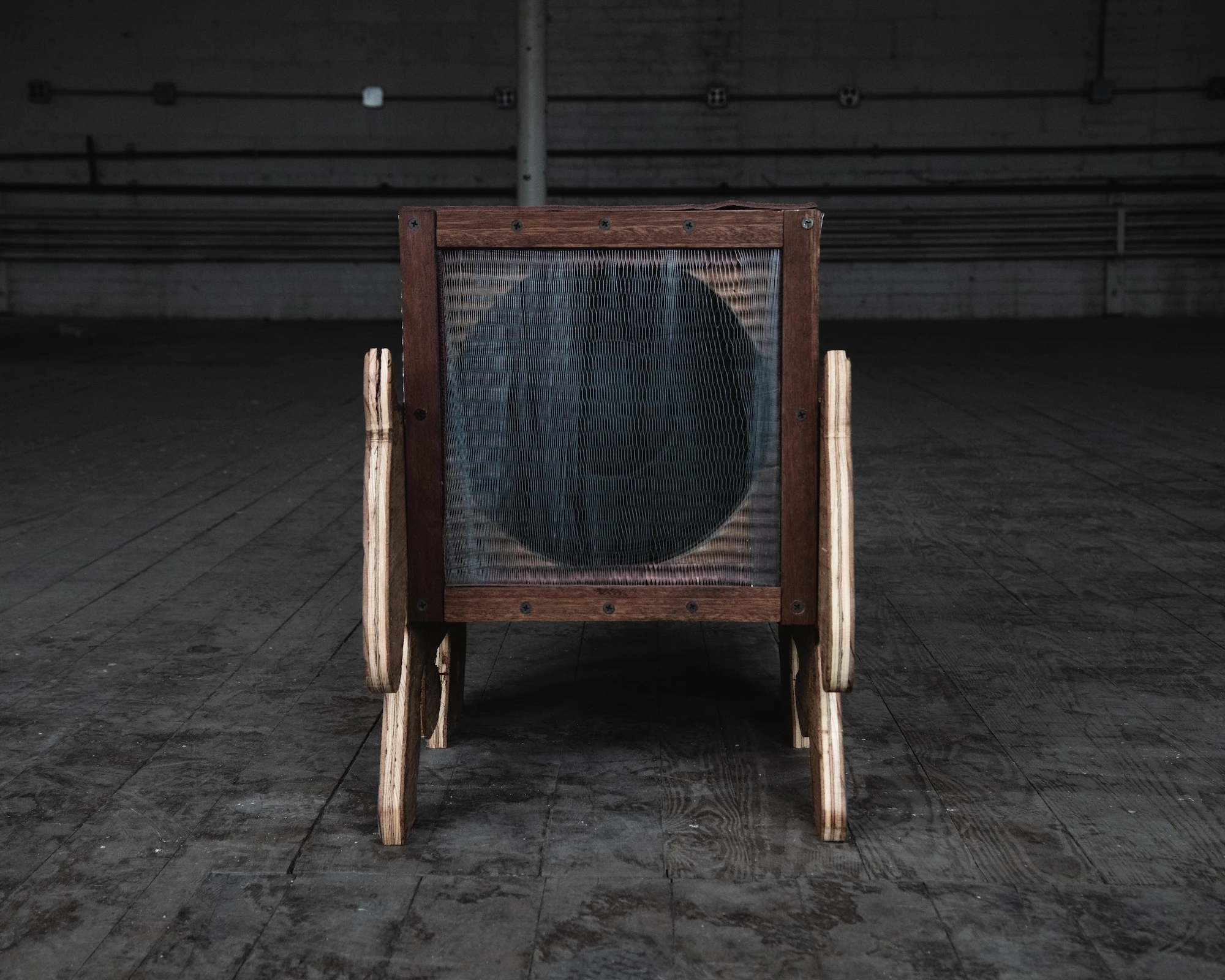
The cloud speaker totems and pony subwoofer are hifi for my bedroom. A piece of plywood in a weird shape near the trash screamed out at me for this. I came across weird ceiling speakers, in an abandoned part of an old office and took a screwdriver to the ceiling to harvest the drivers I used for the midrange. The bass drivers came from someone giving away a car audio speaker, and the tweeters from an old speaker someone had lying around in their basement. The clouds are fun, in that they are bright and you see them. I had been annoyed, after all of this ancient research, that the way I had interacted with speakers was always as this black box, a reference thing that you were not supposed to see. It's meant to be in the background, the sound quality coming out of them was the most important part. But the acousmonium is important. The speaker should have its own personality and speak its truth where it lies. No need to be full or flat. Just the way we all experience music differently there should be preference the speaker has in its own personality on how it wants to reproduce your amplified sound, and if you don't choose clouds, maybe you choose steel, or cone. It's the same as the huge stacks for the rave vs the bookshelf for the home library.
My thesis probe, my midterm was a collection of all of these speaker designs within the archetype of the speaker stack and architectural design. It was important I began to root these designs back in the history and context of their origins. A lot of the research around the culture of sound systems starts in Jamaica, with the stacking of boxes, "out in the street" as sonic warfare and a ritual gathering. It was important that each speaker did its part along the frequency spectrum, to generate a full sound, but equally as important that the speaker stack is the beacon and impulse in the space it was installed. The content played off of the speaker was always an afterthought, but I had begun to compose its playlist, consisting of dub techno, reggae, experimental electronics and field recordings. All very broad genres, but critics seemed to be expecting loud listening because of its monolithic size. I realized after that the monolith is hard to digest. It makes sense in Jamaican soundsystems because they are all aesthetically similar parts of a whole, but these speakers belong in a careful arrangement rather than stacked and hung. The monolith feels full but random. This probe was a representation of myself in all my excited research but all in one ball, an inspiring prompt for my final thesis work which realized a lot of these ideas, but mainly as related to architecture rather than the human speaker scale.